

How is biomethane produced?
Gain an overview of the individual steps of biomethane production - from the selection and pre-treatment of organic raw materials to anaerobic fermentation and biogas production. You will also learn how the resulting biogas is purified and upgraded to natural gas quality so that it can be used as a sustainable energy source.
Production of biomethane
The production of biomethane is a promising process that offers both ecological and economic benefits. Biomethane is produced from biological waste and can be used as a renewable fuel in various applications.
Biomethane is mainly produced from organic materials such as agricultural waste, food waste, sewage sludge and other biological sources. This waste is treated in an anaerobic digestion plant. This releases the methane gas.
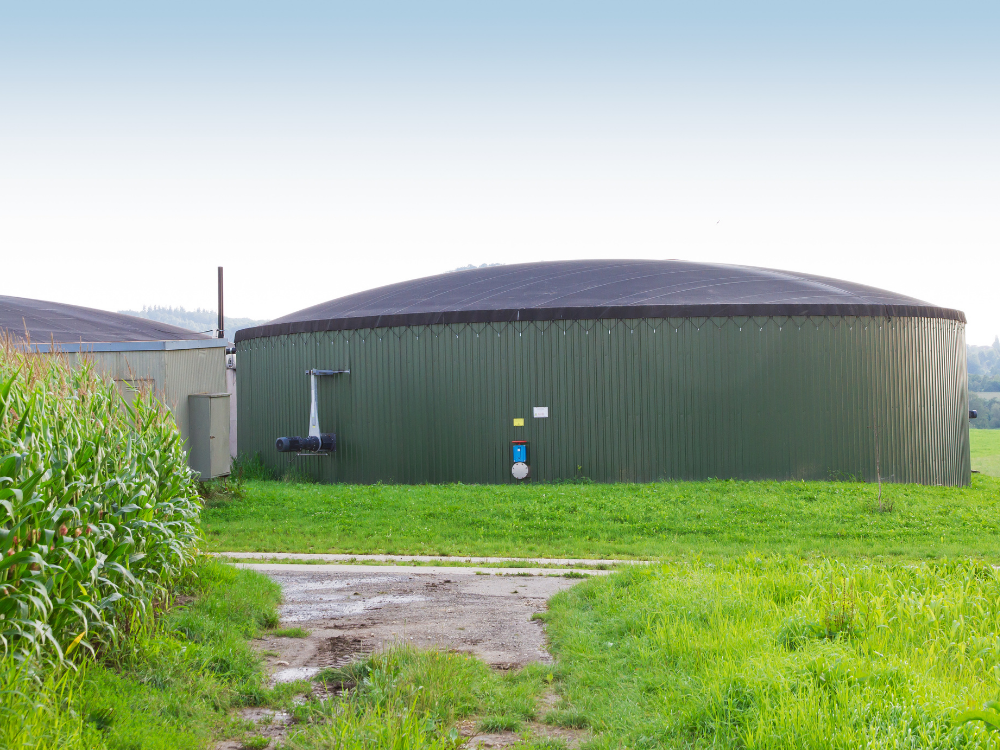
Substrates | Procurement of biomass
The first phase consists of identifying and procuring suitable biomass sources. Various substrates can be used to produce biomethane. Here are some examples:
-
Organic waste: A common source of biomethane is organic waste such as kitchen waste, garden waste, agricultural waste and food waste. These can be used in so-called fermentation plants or biogas plants to produce biomethane.
-
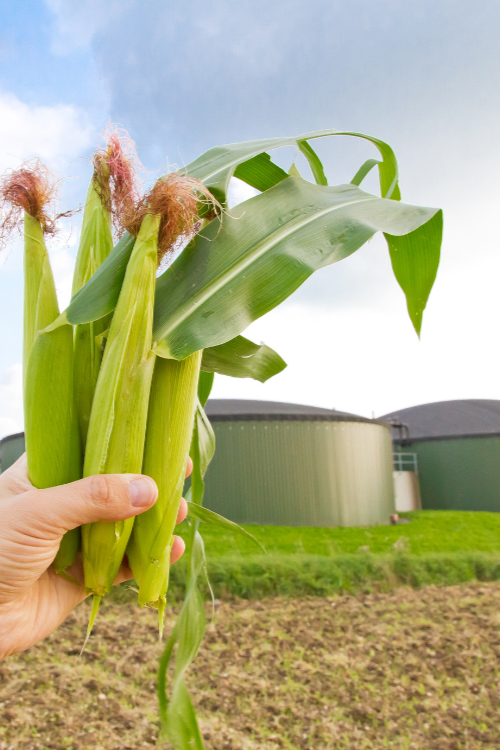
Energy crops: Certain plant species that are grown specifically for energy production can serve as a substrate for biomethane production. Examples include maize, grass, alfalfa and beet. These plants are harvested and fermented in biogas plants.
-
Slurry and manure: Animal excrement such as slurry and manure are also suitable substrates for biomethane production. In combination with other organic materials, they can be used in biogas plants to produce biomethane.
-
Industrial waste: Some industries produce organic waste that can be used for biomethane production. Examples include food processing waste, waste from the beverage industry and waste from the pulp and paper industry.
-
Sewage sludge: Sewage sludge, which is a by-product of wastewater treatment, can also be used for biomethane production. By using sewage sludge in biogas plants, not only can biomethane be produced, but the sewage sludge can also be disposed of while capturing the methane gas that would otherwise escape into the atmosphere.
There are other potential substrates for biomethane production and the choice depends on availability, local conditions and technical capacity. It is important to select substrates carefully to ensure efficient and sustainable biomethane production.
Pre-treatment of the substrates or biomass
The biomass is pre-treated in this phase to prepare it for the fermentation process. This can include shredding, crushing or grinding to increase the surface area and facilitate decomposition.
Anaerobic fermentation
The key to producing biomethane is anaerobic digestion. The natural microorganisms in the waste decompose the organic materials and produce methane gas in the process. The pre-treated biomass is placed in an anaerobic digester, also known as a biogas reactor or bioreactor. The digester is a closed system that prevents oxygen from entering.
The biomass is fermented with the help of anaerobic microorganisms, in particular methane producers. These microorganisms break down the organic compounds in the biomass and produce methane (CH4) as the main component of the biogas.
The fermenter
To create optimal conditions for the microorganisms, the fermenter is kept at a certain temperature (usually between 35°C and 55°C, depending on the microorganisms). In addition, the contents of the fermenter are kept in motion to ensure an even distribution of microorganisms and nutrients. During the fermentation process, the microorganisms decompose the biomass and convert it into biogas.
The biogas consists mainly of methane (50-75%), carbon dioxide (25-50%) and traces of other gases such as nitrogen, hydrogen and hydrogen sulphide. The fermentation process can take several weeks to months, depending on the type of biomass and the conditions in the digester.
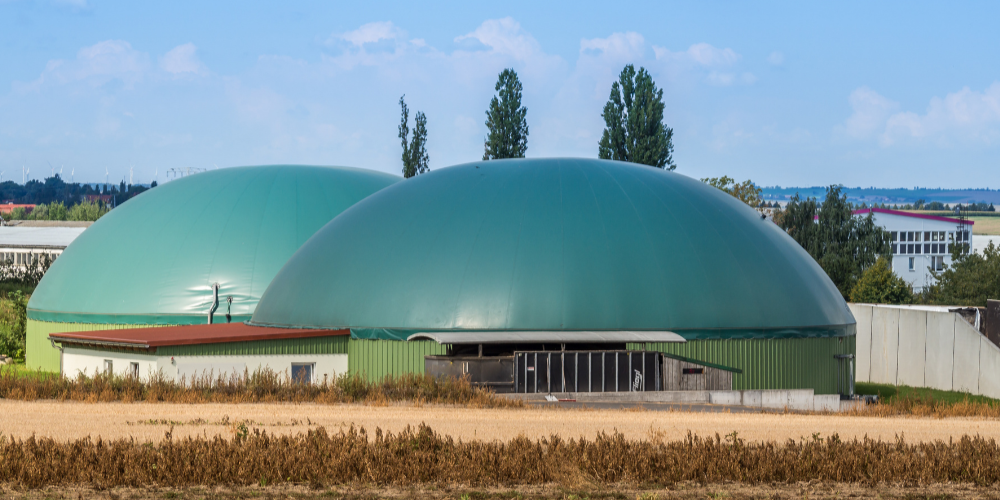
Preparation and cleaning
After anaerobic fermentation, the gas produced contains methane as well as other impurities such as carbon dioxide, water and sulphur compounds. In order to make the biomethane usable for various applications, it must be purified and freed from these impurities. This process is known as purification and includes steps such as dehumidification and desulphurization.
The carbon dioxide (CO2) is then removed from the biogas to increase the methane content. This can be achieved using various methods such as pressure swing adsorption, water scrubbing or membrane separation.
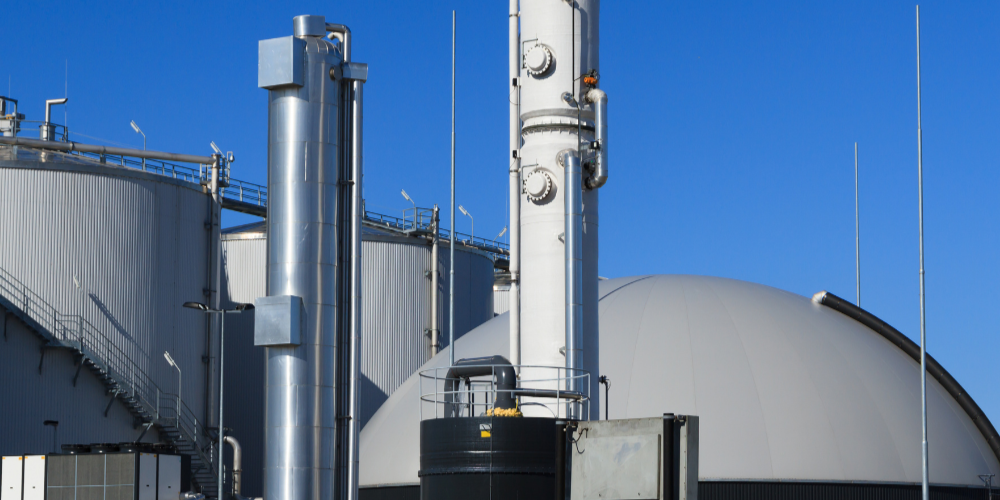
Feed-in and use
The purified biomethane can be transported in existing natural gas pipelines and used to generate electricity, supply heat or as a fuel. It is a climate-friendly alternative to conventional fossil fuels and significantly reduces CO2 emissions. After processing, the biomethane achieves a purity level of around 97-99% methane and can now be fed into the natural gas grid.
Biomethane for the energy transition
The production of biomethane offers a sustainable solution for generating energy from biological waste. The process of anaerobic digestion and treatment enables the conversion of waste into a renewable gas that can serve various applications. By using biomethane, we can reduce our dependence on fossil fuels and make a positive contribution to reducing greenhouse gas emissions.
These are the basic steps in the production of biomethane. The process may vary depending on the plant configuration and biomass source, but the basic principle of anaerobic digestion remains the same. Biomethane is a renewable energy source as the biomass comes from renewable resources and combustion only releases the carbon dioxide that was absorbed during the growth of the biomass, making the process largely carbon neutral.
More articles on biomethane
Is biomethane sustainable?
We examine this question and give you a detailed answer
What is biomethane?
You can find out exactly what biomethane is and how it can be used here
Blog | Information on the THema Biomethane
Our blog focuses on content relating to biomethane and sustainability
How can we help you?
Here you will find some of the most frequently asked questions. If you do not find what you are looking for, you can contact us at any time by phone or email.
General
-
agriportance is a specialized platform for biomethane and LCO₂ and offers sustainable product solutions. We support companies along the entire biomethane value chain – from brokerage and certifications to GHG and mass balance calculations as well as training and consulting. All services are coordinated and available from a single source.
-
Our services are aimed at companies along the entire biomethane value chain – including biogas plant operators, gas network operators, energy suppliers, industrial companies, traders, as well as companies that want to reduce their GHG emissions, procure biomethane and LCO₂, or implement sustainable product solutions.
-
Yes. Our services are scalable and tailored individually to the requirements and resources of your company – regardless of company size.
Brokerage of biomethane and LCOâ‚‚
-
We connect producers, traders and buyers of biomethane and LCO₂ and support the entire brokerage process – from initial contact and contract structuring to successful completion.
-
After an initial needs analysis, we identify suitable suppliers from our network, support negotiations and assist with contractual arrangements. This gives you access to certified biomethane that meets your requirements.
-
LCO₂ (liquefied CO₂) is produced as a by-product during biogas upgrading and can be used industrially – for example in the food industry, agriculture or technology. The use of LCO₂ contributes to resource efficiency and the reduction of greenhouse gas emissions.
GHG accounting
-
A greenhouse gas balance (GHG balance) records and evaluates all climate-relevant emissions along a process or product – from production to use. It is often a prerequisite for certifications and regulatory compliance.
-
A GHG balance is required, among other things, if you want to market biomethane as a renewable fuel, pursue sustainability certifications or provide proof within the framework of the European Renewable Energy Directive (RED II / RED III).
-
Our GHG calculations are based on the current regulatory requirements of RED III as well as the specifications of the relevant certification systems (REDcert², ISCC, SURE). We document all calculations in a transparent and audit-proof manner.
Sustainability certifications
-
We support certifications according to the three leading systems in Germany and Europe:
- REDcert – for biomass and biofuels
- ISCC (International Sustainability and Carbon Certification) – internationally recognized, for various feedstocks and supply chains
- SURE (Sustainable Resources Verification Scheme) – recognized for biofuels and biomass under RED II / RED III
-
A certification proves that your products or processes meet legal sustainability requirements. It is often a prerequisite for marketing biomethane as a fuel, for accessing funding programs and for counting towards national greenhouse gas reduction quotas.
-
A gap assessment is a preliminary analysis in which we compare your company’s current status with the requirements of the respective certification system. This allows gaps to be identified early and closed in a targeted manner before the official audit takes place.
-
The duration depends on your company’s initial situation, the chosen certification system and the certification body. Experience shows that you should plan three to six months for an initial certification. We ensure through structured preparation that the process is as efficient as possible.
-
We also support you during annual surveillance and recertification – including documentation maintenance, preparation for follow-up audits and ongoing communication with the certification body.
Mass balancing
-
Mass balancing is a method for tracking material flows – for example biomethane within a gas network. It ensures that the sustainability characteristics of a product can be documented and transferred along the supply chain without having to physically track quantities directly.
-
Yes. For the marketing of biomethane as a fuel and for eligibility for greenhouse gas quota accounting, a compliant mass balance according to RED III or the respective certification systems is mandatory.
-
Yes. We take care of the complete setup, maintenance and documentation of your mass balance system – audit-proof and ready at any time.
Training and consulting
-
We offer practical training on the following topics:
- fundamentals and functioning of biomethane
- sustainability certifications (REDcert², ISCC, SURE)
- greenhouse gas accounting and mass balancing
- regulatory requirements (RED III, BImSchG, GEG)
- internal audits and certification preparation
-
Our trainings are aimed at specialists and managers in the fields of energy, sustainability, compliance and procurement – both beginners and experienced professionals who want to update their knowledge.
-
Yes. In addition to our standard trainings, we provide individual consulting – for example in developing a biomethane strategy, optimizing existing processes or preparing for regulatory changes.
-
We offer both – digital formats (webinars, online workshops) as well as on-site events at your location or at our premises.
Collaboration and contact
-
The collaboration begins with a free initial consultation in which we analyze your needs and jointly define the appropriate scope of services. You will then receive an individual offer. Operational collaboration takes place with dedicated contacts, clear processes and transparent communication.
-
We can usually start at short notice. Simply contact us – we will get back to you within 24 hours.
-
You can reach us via the contact form on our website, by email or by phone. All contact details can be found on our contact page.
