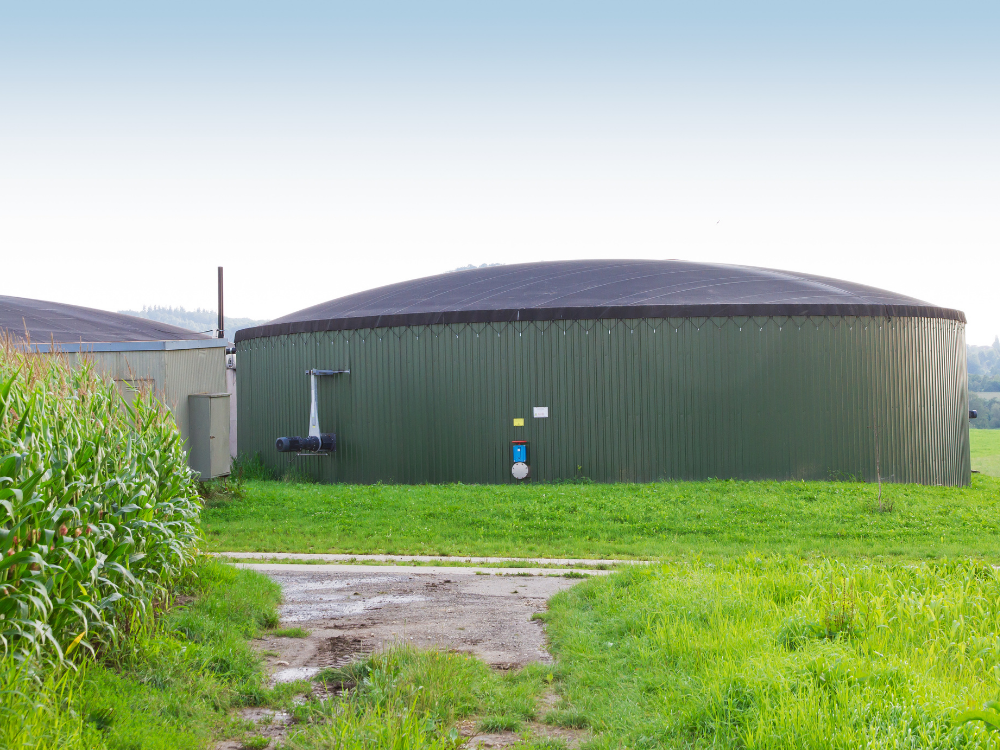
Biomethane is a major player in the energy sector and is playing an increasingly important role in the fight against climate change. As a renewable green gas, it is obtained from various biological sources, including agricultural waste, organic residues and even sewage sludge. Biomethane is produced through a process called anaerobic digestion, in which microorganisms break down the biological materials and produce methane.
The advantages of biomethane are numerous. Firstly, it is an environmentally friendly alternative to fossil natural gas. Biomethane is obtained from renewable raw materials, which leads to a considerable reduction in greenhouse gas emissions. In addition, biomethane can be fed directly into the existing natural gas grid and used for various purposes.
One of the main applications of biomethane is in decentralized energy generation. Biomethane can be used to generate heat and electricity in households, commercial areas and even industrial plants. It can also be used as a fuel for vehicles, reducing the carbon footprint of the transportation sector. The use of biomethane also offers the possibility of energy storage and supply, which is particularly advantageous in times of peak loads.
Furthermore, biomethane is an important component of a sustainable circular economy. By recycling biological waste and residual materials, resources are used efficiently and landfill sites are relieved at the same time. It also promotes regional development, as biomethane plants are often operated locally and create local jobs.
Overall, biomethane offers a promising solution for the energy transition. It is an environmentally friendly alternative to fossil fuels, helps reduce greenhouse gas emissions and promotes a sustainable circular economy. With the increasing demand for renewable energy, biomethane is becoming an important part of our greener future.