Skip to content
Knowledge

How sustainable is biomethane?

Biomethane is considered a sustainable energy source as it is obtained from organic waste and renewable raw materials and produces significantly fewer greenhouse gases than fossil fuels thanks to its closed carbon cycle. It also contributes to waste recycling, decentralized energy supply and the reduction of methane emissions, although sustainability depends heavily on raw materials and production methods.

How sustainable is biomethane?

In the following, we examine whether biomethane is sustainable and what arguments speak for and/or against it. Sustainability is an important criterion for biomethane or bio-LNG and bio-CNGn. Here you will find relevant points and criteria for defining the sustainability of biomethane.

Biomethane is a promising energy source that represents a sustainable alternative to conventional fossil fuels. It is produced by fermenting organic materials such as biomass or sewage sludge. This method makes it possible to convert waste products into a renewable energy source.

A key advantage of biomethane is its low carbon footprint. During the production and combustion of biomethane, only the CO₂ that was previously absorbed by the plants during photosynthesis is released. This closes the carbon cycle and no additional greenhouse gas emissions are produced. Compared to conventional fossil fuels, biomethane therefore helps to reduce global warming.

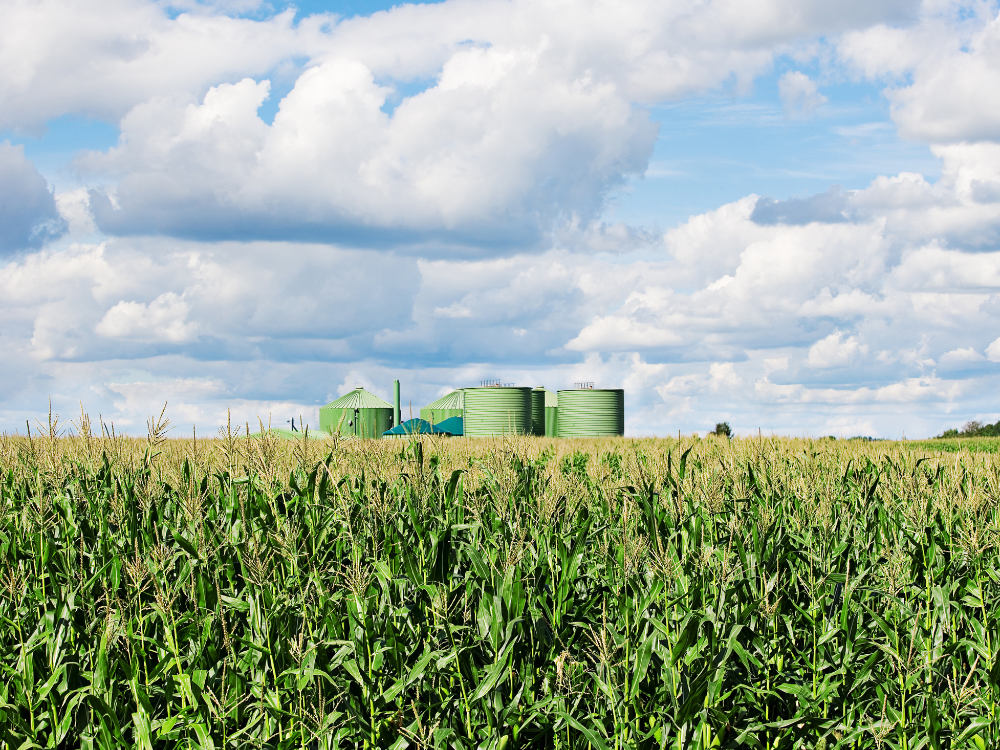
Biogasanlage+Maisfeld

Biomethane is a sustainable alternative to fossil fuels

Another advantage of biomethane is its versatility. It can be used as a renewable fuel for vehicles and offers a climate-friendly alternative to petrol or diesel. Biomethane can also be fed into the natural gas grid and thus contribute to decentralized energy supply. It can also be used to generate heat and electricity, which is an environmentally friendly alternative to conventional heating and power plants.

The production of biomethane is also associated with positive effects for agriculture. By fermenting biomass or animal manure, agricultural waste can be put to good use, which leads to a reduction in environmental pollution. At the same time, the resulting fermentation residue can be used as a natural fertilizer, which increases soil fertility and reduces the need for synthetic fertilizers.

Overall, biomethane contributes to sustainable development as it is based on renewable raw materials, has a closed carbon cycle and offers various application possibilities. It supports the transition to a low-carbon economy and can help reduce dependence on fossil fuels. By promoting biomethane production, we can make our energy supply more efficient and environmentally friendly.

229
58
229
58

Reasons for the sustainability of biomethane

Renewable energy source

Biomethane is produced from organic materials such as biomass, agricultural waste, sewage sludge and other biological waste. As these materials are constantly renewable or available in sufficient quantities, biomethane can be produced continuously, making it a renewable energy source.

Greenhouse gas reduction

Compared to fossil fuels such as coal, oil and natural gas, the combustion of biomethane produces fewer greenhouse gases. During the production of biomethane, methane is separated and captured before it can escape into the atmosphere. Methane is a very powerful greenhouse gas and its use as a fuel reduces its release into the atmosphere.

Waste utilization

Biomethane can be produced from various organic wastes that would otherwise be landfilled or incinerated. By using this waste for biomethane production, the amount of waste is reduced and a valuable energy supply is created at the same time. n fossil fuels.

Decentralized energy supply

Biomethane can be produced locally, resulting in a decentralized energy supply. This means that the energy is generated where it is needed, which reduces the need for long transportation routes and the associated energy losses.

Flexibility of use

Biomethane can be used in various areas, for example to generate electricity, provide heat and as a fuel for vehicles. This versatility makes biomethane a practical option for a sustainable energy supply in various sectors.

Promotion of agriculture

The use of biomethane can be beneficial for agriculture as it creates an additional source of income. Farmers can produce biomethane from animal waste or energy crops and either use it on site or feed it into the grid to generate additional income.

Technological progress

The development of biomethane as an energy source has led to the further development of technologies and processes that enable more efficient and environmentally friendly production methods. This technological progress can also be transferred to other areas of renewable energy production.

It is important to note that the sustainability of biomethane also depends on the type of biomass and the production methods. Sustainable biomethane production requires careful selection of feedstock to ensure that there is no negative impact on the environment or food production.