Regulatory Framework in the Heating Market: RED II/III, EEG/GEG & Guidelines
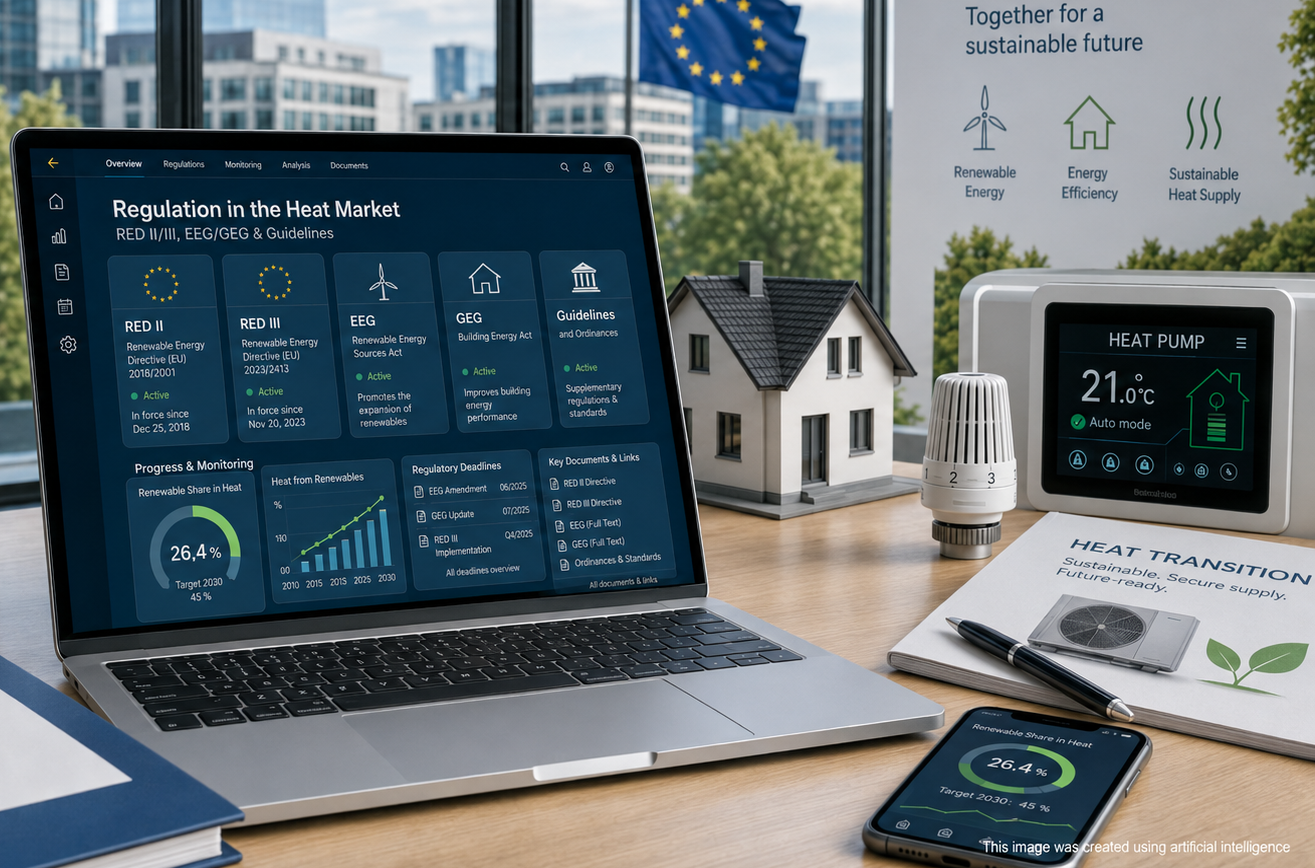
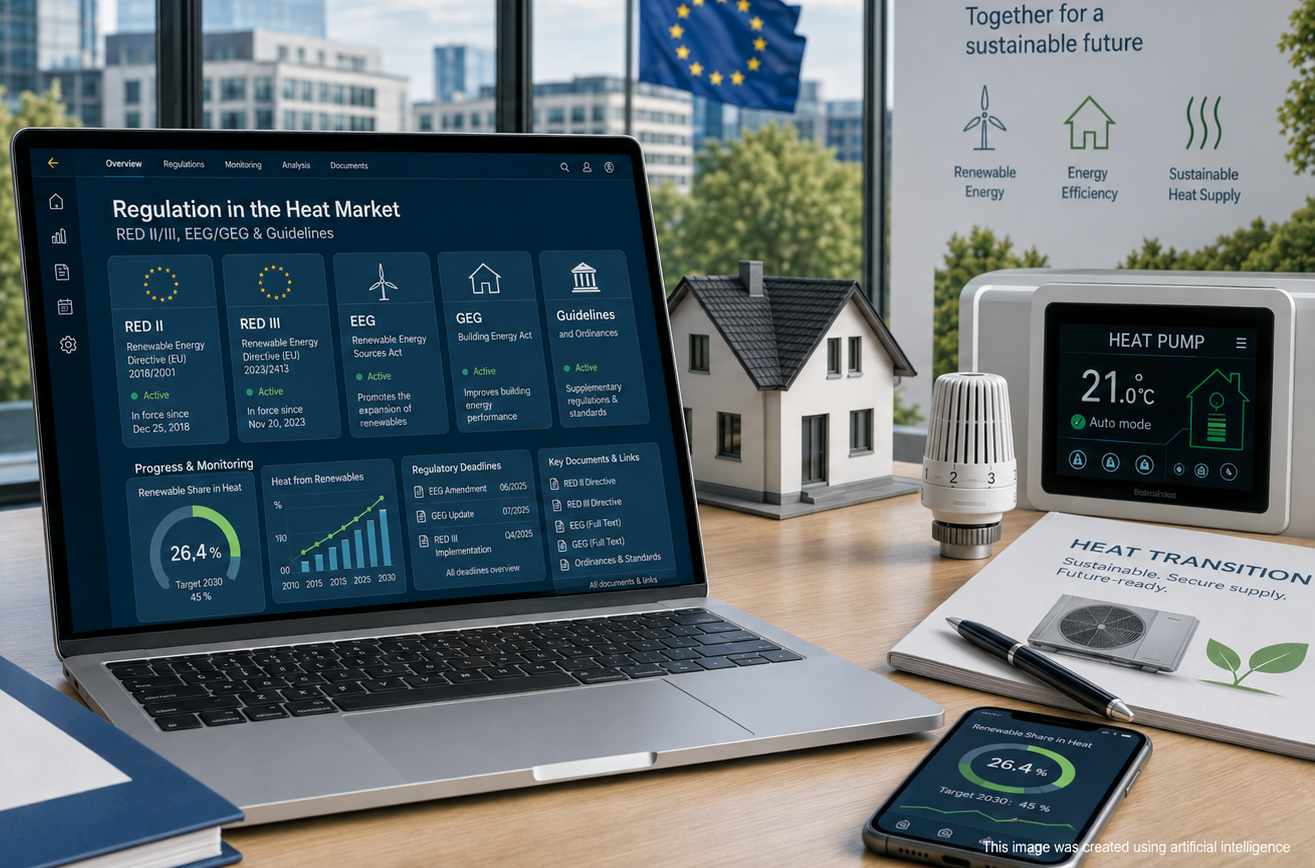
Anyone planning a heating solution today is no longer just planning the technology—they are, above all, planning the framework conditions. After all, whether a concept is considered sustainable, whether it receives subsidies, is accounted for, or is even accepted at all depends increasingly on regulatory requirements. This is precisely where European directives such as RED II/III intersect with national regulations like the EEG and GEG —and suddenly, it’s not just efficiency that matters, but also origin, verification methods, long-term cost trends, and greenhouse gas emissions. However , whether biomethane isclimate-neutral depends on accounting boundaries, standards, and emissions assessment along the entire chain. Biomethane can achieve very low greenhouse gas emissions, but credibility comes only through transparency and reliable verification.
EU Framework: What RED II/III Means for Biomass, Biogas, and Biomethane
RED II/III is more than just a political vision. For renewable gases, the directive sets clear requirements for when an energy source is recognized as renewable and how sustainability and greenhouse gas reductions must be demonstrated. Anyone looking to use biomethane quickly realizes that it’s not just the “green” molecule that matters, but the entire chain behind it—from the feedstock base through processing to documentation.
This is precisely why biogasand biomethaneare fundamentallydifferent. Biogas is produced through fermentation and contains not only methane but also CO₂ and other byproducts. Biomethane is processed biogas that meets natural gas quality standards. This is precisely what makes it attractive for practical applications, because it can be fed into existing gas grids and used in applications similar to natural gas.
This quickly leads to the question : Biomethane for gas heating— can it work? Can a gas heating system in an existing building serve as a bridge toward climate goals? In principle, biomethane can replace fossil natural gas—but only if availability, contract models, and verification are clearly regulated, and if it is used in situations where electrification is not easy or not immediately possible, such as during peak loads or in certain existing buildings.
GEG 2020: What’s changing—and why this question remains important:
In the building sector, the GEGsets the framework. In practice, it is not so much the headline that matters as the logic behind compliance: requirements must be demonstrably met, often through a combination of efficiency, renewable energy shares, and appropriate supply concepts. Those who adopt a systemic approach early on reduce project risks.
Another driver is more subtle but very noticeable: the BEHG. The national CO₂ price is shifting economic feasibility calculations because fossil fuels are becoming more expensive and riskier to use. As a result, alternatives are becoming more attractive—and biomethane, too, can become more economically relevant in certain scenarios, provided regulatory approval is secured.
In addition, municipal heat planning is changing the perspective on projects. This is often referred to by the acronym WPG (Heat Planning Act). Heat is increasingly viewed in spatial terms: neighborhoods, networks, and local supply strategies. This is precisely where WPG biogas becomes relevant, because biogas and biomethane potential varies greatly from region to region and can either be specifically harnessed or overlooked in local plans.
The bottom line is this: RED II/III, EEG, GEG, BEHG, and WPG are all interlinked. Those who consider them together early on can develop solutions that not only work technically but also remain regulatively viable—and in the heat transition, this is increasingly what determines success or stagnation.
As of January 2026

Any questions?