Electric or hydrogen as a driver for climate-neutral mobility? However, agriportance is focusing on the alternative fuel biomethane for a variety of reasons.
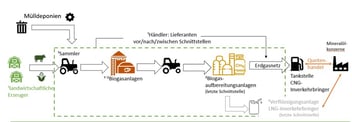
Biomethane is produced from organic residues, liquid manure or dung. Farmers process biomethane from the biogas of a biogas plant, which consists of around 60 % methane and 40 %CO2.CO2 is separated during biomethane processing. The producer can then market the biomethane as a fuel at filling stations. Biomethane can be used as a green substitute for natural gas and is conditioned to CNG (gaseous) or LNG (liquid) quality.
Biomethane almost climate-neutral
A major advantage of biomethane is that this form of propulsion is virtually climate-neutral. Trucks or cars powered by biomethane can reduceCO2e emissionsby over 90 % compared to diesel. This makes biomethane one of the most attractive fuels for climate-neutral mobility on the market. Particularly when considering the climate emissions of electric or hydrogen cars whose fuel was produced using the German electricity mix, it becomes clear that biomethane is currently the most interesting alternative for climate-conscious car or truck drivers. But biomethane is not only an interesting fuel in terms of climate emissions, it can also score points in other areas.
Biomethane is cheaper than other renewable forms of propulsion
The production of biomethane as a fuel is generally more expensive than the production of fossil natural gas, while natural gas has significantly higher climate emissions. Users can easily fill up natural gas cars with biomethane as a fuel. A biomethane car is cheaper to buy than an electric car, which is mainly due to the high price of the battery in an electric car. This means that biomethane can compete with diesel or natural gas drives due to its price. The argument that green drive technologies are significantly more expensive than fossil fuels is therefore invalidated in the case of biomethane.

Biomethane has an existing charging and vehicle infrastructure
The green fuel biomethane is used as a substitute for natural gas. This is practical, as there is already an existing charging and vehicle infrastructure for CNG (compressed natural gas) and LNG (liquefied natural gas) with almost 900 natural gas filling stations across Germany. Accordingly, a biomethane/natural gas mixture is the perfect bridging technology for a sensible mobility transition. Liquefied biomethane (LNG) is interesting for trucks due to its high energy density: even a 40-ton truck can travel 1500 km with an LNG tank. Once the tank is empty, biomethane vehicles can be refueled at the same speed as vehicles running on petrol or diesel.
Biomethane: the sustainable alternative to fossil fuels
For the production of electric cars, rare earths such as dysprosium or neodymium as well as other elements such as lithium or cobalt are required to manufacture the batteries. As a rule, these elements are in short supply and also have problematic suppliers, such as China in the case of rare earths or the Congo in the case of cobalt. This can lead to geopolitical conflicts and dependencies - because currently around 2/3 of rare earth production comes from China. Mining standards are often low, both for workers and for the environment. Another problem is the disposal and recycling of batteries. The situation is completely different with biomethane - with regional and sustainable biomethane production, there are no risks of dependency or environmental impact.
Electromobility and hydrogen drives have their raison d'être for good reasons, but biomethane can score points in various areas. The renewable fuel can play to its strengths in the following vehicle types in particular: Heavy goods vehicles, shipping and aviation as well as agricultural engineering. This is because biomethane propulsion does not require a heavy battery, which can quickly weigh nine tons in a 40-ton truck. A summary of the other advantages of biomethane:
- Biomethane is virtually climate-neutral, as it causes more than 90% fewer climate emissions
- A biomethane car or truck is cheaper than other renewable forms of propulsion
- Biomethane has an existing charging and vehicle infrastructure due to its compatibility with natural gas
- Biomethane does not require the disposal of problematic batteries