Nowadays, the concept of ecology is at the heart of the discourse on the further development of agriculture. It's about changing our behavior and building a greener future. The stakes are high, both for individuals and companies. We can act on different levels, but in order to take action, we need to understand the different environmental concepts and implement them step by step. Consequently, the question to be answered here is to what extent agroecology embodies sustainable and environmentally friendly agriculture .
Concepts of agroecology
What is agroecology?
Agroecology is an agricultural approach that optimizes food production without negative externalities for nature. This agricultural system relies entirely on the functionalities provided by ecosystems. In this case, it is about using nature to support production and its maintenance (reducing greenhouse gas emissions, limiting the use of pesticides on the land, etc.). Thanks to this greener approach, organic farming improves environmental performance while maintaining the economic returns of production. Overall, agroecology diversifies agricultural production systems with a variety of crops, an extension of crop rotations in the fields and the development of agroecological infrastructures.
The concept of bioeconomy
The bioeconomy is the use of renewable and free energy in abundance, such as solar energy. It is an economy based on the production and mobilization of biomass, whether from forestry, agriculture or aquaculture. The bioeconomy is an inexhaustible resource that is found in the environment and contributes to the development of agroecology for a world with ecology in focus.
Here are the activities that can be included in the bioeconomy :
- Bio-resources: represent plant and animal resources from agriculture, forestry and fisheries.
- Agriculture and food industry: processed products that are intended for our nutrition.
- Bio-based products: these are products made from plant or animal sources. They are used to manufacture materials such as packaging, plastic bags, vehicle parts, paints, etc.
- Recycling of organic waste: This includes the composting of green waste and the use of manure from animal husbandry to generate energy (fertilizer). This method is intended to limit the use of environmentally harmful resources by favoring renewable energies.
- Bioenergy: This is the use of energy stored in biomass. These include:
- Wood
- methane
- Carbon that is converted into gas
- The biofuel
Bioenergy in agroecology
"Bioenergy can be used in a variety of ways. Biomass can be used directly on site and converted into electricity and local heating. This is the case, for example, with biogas plants with a CHP and local heating network. Biomass can also be used as an energy source. This is done with wood pellets, which are transported by truck, or with biomethane, which can be transported in the existing natural gas network. These energy sources can then be converted into electricity and heat at locations far away from their place of origin. A third and currently very attractive application is the production of fuels from e.g. agricultural residues and waste materials. Biomethane can be obtained from residual and waste materials such as straw or liquid manure and dung. This takes place in biogas plants where microorganisms convert biomass intoCO2 and methane (CH4) in the absence of air. In addition to the gas, the so-called fermentation residue remains, which can be used as fertilizer. This makes it possible to obtain an energy source in the form of methane and fertilizer in the form of fermentation residue. Residual and waste materials are thus utilized in the best possible way. " - Henning Dicks, agriportance GmbH
How do consumers apply agroecology when shopping?
Consumers are increasingly committed to tackling environmental issues in order to promote food self-sufficiency, avoid waste and buy products from local and organic agriculture. Today, a new way of producing, distributing and consuming is crucial. The climate emergency, the health crisis and the conflicts in Ukraine show how vulnerable and dependent our agricultural system is on globalization. This is why a transformation of agricultural practices is taking place.
The answer to ecological challenges
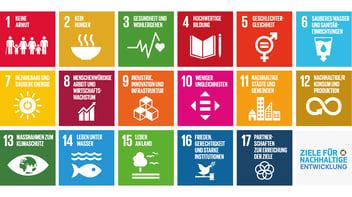
Climate change and its impact on the agricultural sector and food security are of great interest to the Ministry of Agriculture, and research makes a significant contribution to this. As a result, the BMEL has developed a strategy that not only aims to increase agricultural production, but also the quality of food. A variety of local foods should be available for the entire world population. Distribution issues and income play a role here. In addition to access to healthy food, it must also be affordable. Production should be as sustainable as possible and take gender-specific issues into account. The specific goals were set out in the 2030 Agenda.
Many changes are needed to meet the new environmental challenges. The development of agroecological practices makes it possible to reduce the negative external effects of intensive agriculture . The Parliamentary State Secretary, Dr. Ophelia Nick, pointed out the importance of this change at the beginning of the year: "[...] The compass must be clearly aligned towards agroecology - nationally and internationally. We need to rethink agriculture along the entire value chain. Our new Federal Government is doing this - also with support projects in Africa and Asia. If we gear every step from production to preparation towards sustainability and health, we can make decisive changes to the system and preserve our planetary resources for future generations. "
Otherwise, other actors are experimenting with new agricultural and nutritional practices that aim to initiate multidisciplinary work with different stakeholders:
- Researchers
- agricultural engineers
- farmers
- Professionals from the environment or nutrition sectors
Agroecology and consumption
How will tomorrow's consumers consume?
For many people today, consuming a product or service means being responsible for their choices. It is well known that most industries use practices that have a negative impact on our environment. In light of this, the consumer must become a "consom actor" and there are several ways to make their consumption behavior more sustainable.
- Consume locally to support farmers in the region
- Buy durable and recyclable appliances
- Choose appliances with good energy efficiency (class A or B).
Because if tomorrow's buyers determine their own consumption, companies will have to adapt to the population's consumption patterns by offering environmentally friendly products and services. In addition, the transportation of goods is a major environmental burden. It is therefore better to consume seasonal food that comes from local producers . Thus, short transportation routes should be preferred over imported products. In addition, local food is often fresh, high-quality produce that is often grown using organic farming methods. Finally, consumer behavior that favors short distances also means supporting small producers. They contribute their know-how in Germany for a local, environmentally friendly and solidarity-based economy.
The development of self-sufficiency
When we talk about self-sufficiency, we imagine producing all our own food and everyday items in the countryside. Let's remember that the idea is not to be completely self-sufficient in all areas. Producing some of your own food is a nice ecological initiative that allows you to cut out the middlemen and consume only your own harvest. There is also more and more agricultural land in the cities that can be farmed by private individuals. More and more people are deciding to start their own urban farm.
Dedicate your production to food security
Food safety is of paramount importance in this production context. Therefore, urban farmers choose to treat seeds with crop protection products to maintain or regulate their production. There are different ways to treat and protect plant organisms:
- Herbicides to reduce weeds
- Fungicides to control the occurrence of fungi on plants
- Auxiliaries to strengthen plant protection
- Trace elements for crop development
- Insecticides to control insect eggs and larvae
These products for the protection of plant organisms are stored in manure spreaders, which you can find here. Plant protection products are used to benefit or, on the contrary, regulate the production of plant crops in our society. Agricultural products are of vital importance to humans and animals. Therefore, certain obligations regarding production and the choice of plant protection products are necessary.
Fertilizer alternatives
Certain forms of fertilizer are also coming under increasing criticism. A more sustainable alternative here could be insect fertilizer, for example.
"The insect fertilizer comes from zero waste production. This is a production concept in which all manufactured products can be used for plant or animal nutrition, for example. Added to this is the sustainability of its raw materials: Insects have the ability to upgrade organic residues that usually end up in composting or biogas plants. By breeding insects, these material flows are put to very high-quality use, making the nutrients and energy they contain directly available to the agricultural value chain " - Kai Hempel, madebymade GmbH
"The special thing about insect fertilizer is that the product not only provides a wide range of nutrients, but also induces biologically beneficial effects based on nature's example: One natural component of the insect fertilizer is chitin. This natural substance is found in many insect skins and is an important messenger substance in the plant world, signaling to the plant the threat of insect damage. If plants perceive chitin via their receptors, they activate their natural defenses and ensure that they are better protected against pathogens " - Yannik Weinreis, madebymade GmbH
Alternatives to pesticides
There are many alternative techniques to plant protection products. It's about combining different cultivation systems that reduce the risk of spreading bio-pests and prevent soil erosion. Here are some alternative practices:
- Crop rotation: a practice dating back to the Middle Ages in which different plant families are grown in the same field.
- False seedbed: preparing the soil to allow weed seeds to germinate and then destroying them before sowing.
- Building up a plant cover: improves the fertility of your soil and reduces weeds in the following crop.
- Delaying sowing: reduces negative external effects on the environment.
- Prophylaxis: practice to limit the spread of diseases and pests.
- Mechanical tillage: or "weed control", a technique known from organic farming.
- Grassing: using pre-selected species to compete with weeds.
- Mulching: technique that limits the growth of weeds and certain fungi by depriving them of light.
- Protective netting: this technique replaces the insecticide and prevents butterflies from reaching the fruit (e.g. apple trees).
- Cultivate resistant varieties: with plants that are more resistant to diseases.
- Functional biodiversity: attract, house and feed native beneficial insects around crops to help keep pest populations below the economic damage threshold.
Limit energy consumption
Being ecologically active also means reducing your energy consumption in everyday life. In fact, there is still a lot of waste in this area among private individuals and companies. The use of fossil resources is more than ever a threat to our ecosystem and we must prioritize natural resources in our daily lives. There are simple gestures that we can all adopt, such as not overheating the home in winter, remembering to unplug or turn off electrical appliances when leaving the house, taking short showers and avoiding baths and using household appliances in eco mode.
There is also a greener solution to our daily electricity consumption, namely solar energy. This option allows you to become a consumer and producer of your own energy, which is also renewable. The demand for solar panels is growing all the time. Not only is it environmentally friendly, it also offers the user added value in the long term. The best installation is and remains the photovoltaic system on your roof, which draws its energy from the sun's rays. Even if this installation still requires a considerable budget, the investment pays for itself after around ten years.
The whole of Europe is trying to reduce its energy consumption, including France. An Ademe report also proposes some levers to reduce energy dependency:
- Reducing the financial risk due to energy prices#
- An optimal use of agricultural inputs
- Modernization of agricultural inputs
- The production of renewable energy for own consumption.
In addition to a solar system, biomass heating could also be an interesting option for farms in order to reduce their carbon footprint and make optimum use of resources.
The balance between resilience and profitability - agroecology
Overall, it is about finding a balance between resilience and profitability in order to rethink our consumption patterns in favor of biodiversity. Techniques need to be implemented to achieve this:
- Gear production systems towards lower input requirements.
- Move away from intensive livestock farming and promote self-consumption and autonomy in animal nutrition.
- Shift certain productions to Germany or Europe to avoid too many imports (transportation and seasonal products)
- Generalize agroecology (diversification of crops, increased planting of hedges and promotion of farmers' seeds and local know-how).
- Promote sustainable labels.
Some of these methods are already proving their worth in our agricultural production, and we must use all these examples to promote this type of activity. The future of the bioeconomy depends largely on our consumer behavior.